Project Overview
For this project, I designed the onboarding experience of the Nudge App. Nudge is a mobile app that was created to help users build sustainable habits. Nudge leverages the habit forming cycle of Cue -> Crave -> Response -> Reward as well as the idea that consistent incremental improvements result in large sustainable changes, a concept made popular by the book Atomic Habits by James Clear. The onboarding experience needed to do more than introduce users to the app. It had to give them a sense of how the product works while keeping the process clear and approachable. My goal was to design an entry point that felt simple, supportive, and motivating so that users could complete their first session with confidence rather than feeling overwhelmed.
Challenge
The onboarding process should explain the concept and the psychology behind the app without turning into a lecture. I needed to be mindful of the amount of information provided right at the start because this will be the user's first impression of the app and we needed to provide an experience that was clear and simple to follow. I also needed to incorporate a few key things in the process like allowing the user to personalize their experience, getting notification permissions, and ensure the user has created their first habit in the app by the end of the onboarding process. Balance is important during onboarding, as we want to collect key information, but we don't want to overwhelm. This is important as it provides the user with "an early win", creating a positive association with the app.
Audience and Personas
The first step is to understand our core target audience. Based on research and analytics, I defined two core personas to anchor the onboarding strategy for Nudge. They represent the most common patterns we see in habit formation: time‑poor professionals who want low‑friction support, and motivated learners who need engaging reinforcement. Together they cover a wide range of goals, contexts, and motivational profiles while keeping the design focus tight.
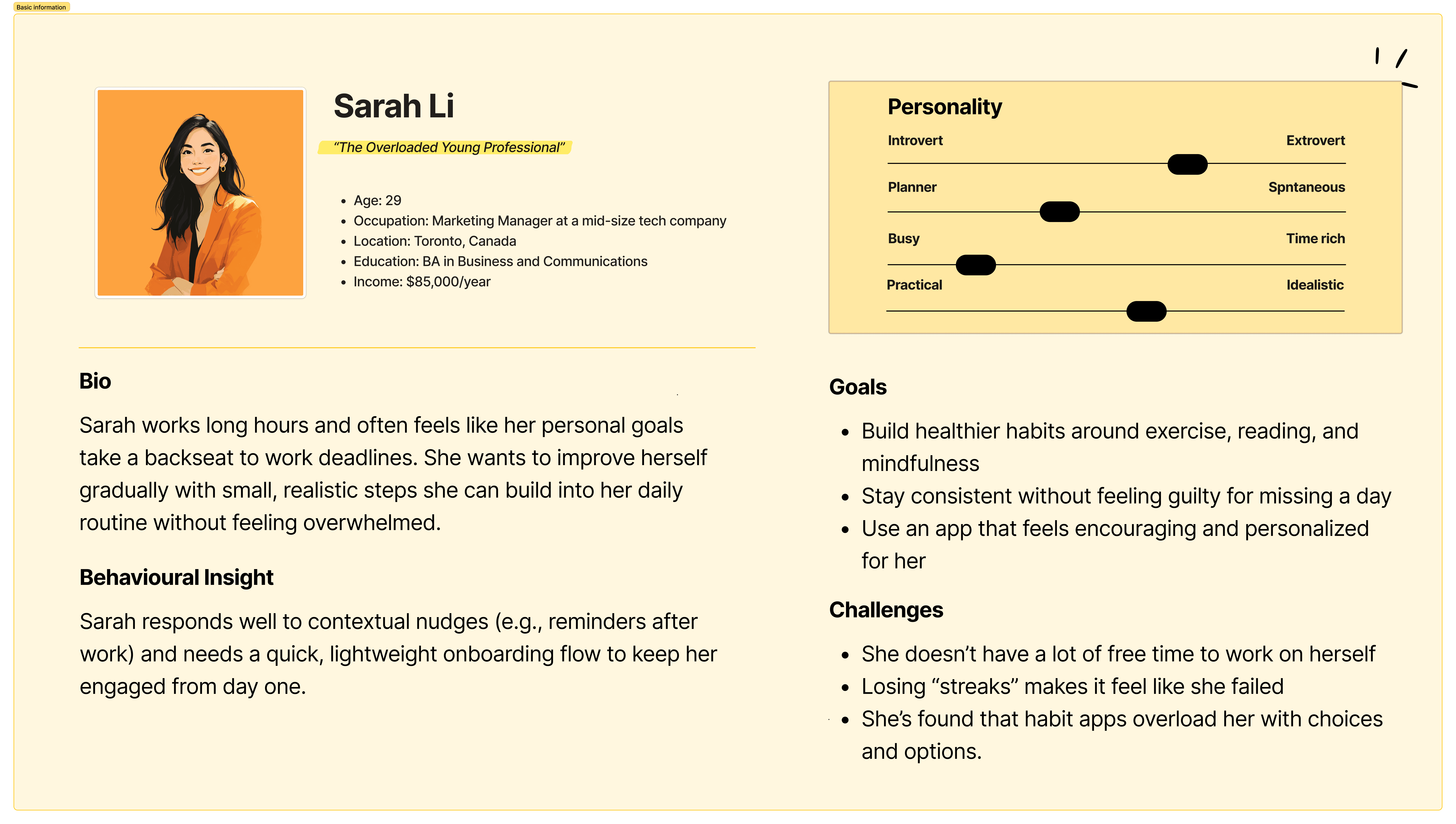
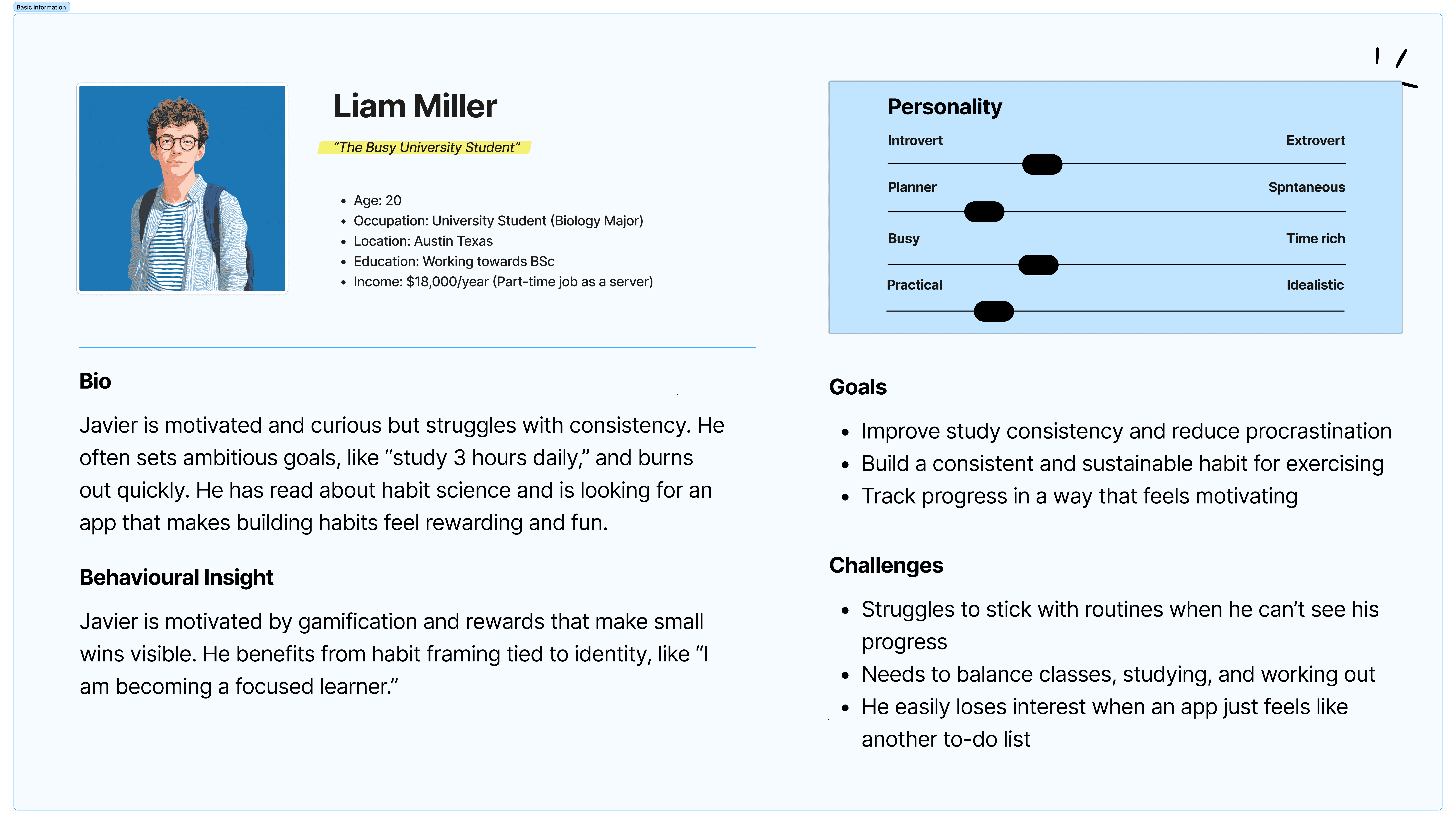
From these personas, there are a few important insights to keep in mind when designing our onboarding flow:
Avoid choice overload and provide a clear and simple path
Provide default selections of the most common habit goals
Provide early positive feedback
Introduce light gamification elements
Present progress immediately
The Onboarding Flow
The next step was to translate our research and insights into an onboarding flow. The goal was to create an experience that introduced the app, make the experience feel personalized, and provide them with a sense of progression without overwhelming them. Each step was influenced by our personas as well as our core objective of building sustainable habits through small and consistent improvements.
Welcome and Framing
This first screen is minimal with a simple motivating message. We felt this was important as we wanted to present the app as a calm and guided first impression, assuring users that this app won't be overwhelming. We had a few ideas for this first message including:
"Your journey starts with a single step"
"Small actions, big impact"
"Tiny steps, lasting change"
We ended up with "Small changes, big results. Let's build your first habit together." We decided on this as it used simple language, was impactful, and provided a clear call to action.
Identity Anchoring/Personalization
This next screen is all about identity anchoring and personalization. We want the user to feel like we're building an experience just for them. This provides users with structure as well as intrinsic motivation.
Our prompt, "I want to become more of a … " is written in first-person to support this goal, it makes the user feel like they are in control of their own experience. This is also the step where we help the user set their first goal in the app. To help reduce cognitive load, we provide a varity of the most common habits from our research and analytics for the user to select. We also provide the option for them to type in a habit.
First Habit Selection
Based on what the user chose in the previous step,
35%
25%
84%
Motion
Project Lead
Project Type
Website Redesign
Duration:
5 minutes